Hayla: A Handwritten Font That Elevates Brand Identity with Personality
A Fresh Start with Hayla on a Brand Board
Opening a blank brand board for a new client always feels like a mix of excitement and pressure. This time, I was working on a soft rebrand for a small artisan bakery looking to refine their visual identity. I had a few script fonts in mind, but I decided to give Hayla a try—mainly because of its promise of being a “true favorite” and PUA encoded, which usually means better glyph access and flexibility.
As soon as I typed the bakery’s name into the logo concept mockup, I noticed how effortlessly Hayla brought warmth and authenticity to the design. It’s a handwritten font, yes—but not the kind that feels overly casual or too whimsical for a professional setting. Instead, Hayla walks a fine line between expressive and polished, making it feel at home in both print and digital branding environments.
What Makes Hayla Visually Unique?
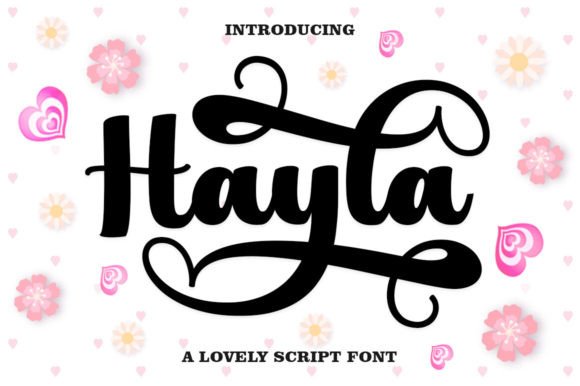
Hayla is a script font with a natural, flowing rhythm. It doesn’t mimic the stiffness of a calligraphy pen, nor does it lean into exaggerated swashes that can feel forced. Instead, it carries the gentle imperfections of real handwriting—slight variations in stroke weight, subtle bounce in the baseline, and smooth transitions between letters. These characteristics give it a human touch that’s hard to replicate with more structured typefaces.
It comes with ligatures, alternates, and swashes, which I found incredibly useful when fine-tuning the logo. The PUA encoding made accessing these alternate characters straightforward, even without advanced design software. Whether I was designing a wordmark or a monogram, Hayla offered enough variation to keep the typography interesting without becoming distracting.
Testing Hayla Across Brand Touchpoints
I tested Hayla across a variety of branding assets: a logo draft, packaging mockup, business card layout, social media post, and a website header. Each time, the font brought a sense of approachable elegance. On the bakery’s packaging concept, it looked charming on a brown kraft label with minimal ink. On the website header, it added a personal feel to the brand’s hero section without sacrificing legibility.
Where Hayla really stood out was in social media design. It worked beautifully on quote graphics and promotional posts—especially when paired with a clean sans serif for contrast. It also held its own on printed materials like business cards and thank-you tags, where a handwritten style helps create a memorable tactile experience.
When Hayla Shines—and When It Doesn’t
Hayla is best used as a display or headline font. It’s ideal for logos, brand names, short taglines, and accent text where personality matters more than precision. It works well in creative industries—think handmade shops, boutique studios, wellness brands, and food businesses that want to project warmth and authenticity.
That said, it’s not a font for long paragraphs or small-size body text. Its organic flow and slight irregularities can reduce readability in dense copy. I wouldn’t recommend it for formal corporate use or technical documents. If you’re designing a brand system that requires versatility across both headlines and body text, you’ll definitely need to pair Hayla with a more structured font.
Pairing Hayla with Other Fonts
Font pairing is key when using a distinctive script like Hayla. For the bakery project, I paired it with a clean, modern sans serif—something like Montserrat or Lato. The contrast between the soft curves of Hayla and the geometric structure of the sans serif created a balanced and contemporary feel.
You could also pair Hayla with a serif font for a more traditional or editorial look, or with a minimalist monospace for a playful, modern twist. The key is to let Hayla be the star while grounding it with a supporting typeface that brings clarity and structure to the overall design.
Technical Considerations and Licensing
Hayla is PUA encoded, which makes accessing its alternate characters and ligatures much easier, especially in programs that don’t support full OpenType features. It includes a range of weights and styles, and I found the multilingual support to be solid—making it suitable for international branding projects.
It also comes with webfont licenses in most commercial packages, which is a big plus for designers building websites or digital assets. Always double-check the licensing terms before using Hayla in client work, especially for merchandise, print-on-demand, or large-scale branding systems.
Final Word: A Thoughtful Addition to Any Designer’s Toolkit
Hayla isn’t just another script font—it’s one that brings character, flexibility, and quality to the table. Whether you're designing a logo, packaging, or social media assets, it adds a personal, handcrafted touch that resonates with audiences. It’s not a one-size-fits-all solution, but for the right project, it can elevate a brand’s visual language in a meaningful way.
Like any creative tool, it works best when used intentionally. I’d recommend testing Hayla in context—mock up a logo, try it on a product label, or layer it into a brand board before committing. When paired thoughtfully and used at the right scale, Hayla can be the quiet hero of a memorable brand identity.